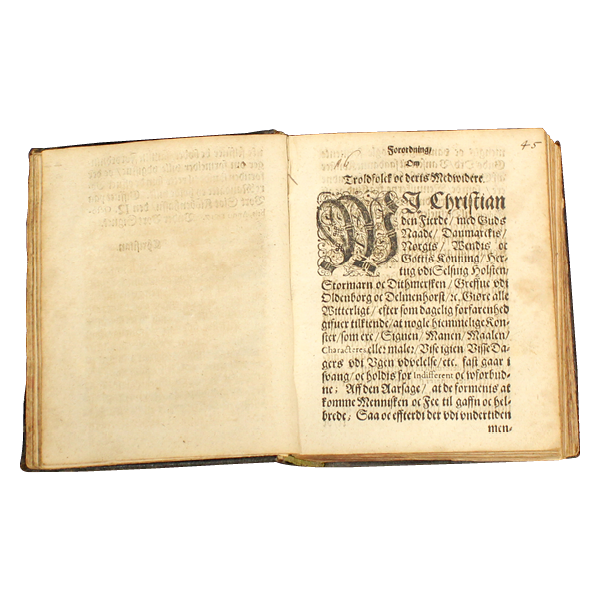
“Thou shalt not suffer a witch to live”.
The book of Exodus of the Bible doesn’t mince words when it comes to witches – and Luther, whose ideas are the foundation of the Danish Protestant Church, states that these Devil’s whores must be burned. Although legislation varies from place to place in Europe, having made a pact with the Devil is punishable by death at the stake in Denmark.
The witch trials themselves are conducted like all other trials in Denmark, in courts of law, not ecclesiastical courts – nor are there any mob executions. In fact, the role of the Church only becomes clear once the accused has been convicted, because a minister then takes over – along with the executioner – to encourage the condemned to make further confessions.
A private accuser begins by accusing a person of witchcraft and brings the case before the local court – the precursor of the town court. The judges here are usually just peasants who may not even be able to read the law. Following the passing of the sentence, the case proceeds to the High Court where a better educated judge reviews the case and pronounces the final verdict. The accused must manage his own defence. If she’s a woman, she cannot represent herself though, but must ask her husband or son or someone else to do it for her. About half of the people accused of witchcraft in Denmark are acquitted at the high court.
The highest authority is the Royal Court of Appeal. Only few cases end up here – usually trials involving nobility. Such cases very rarely lead to executions.