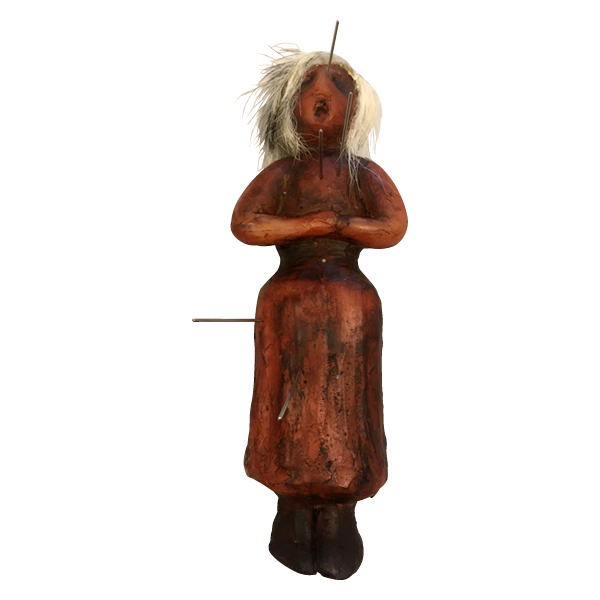
The Church are firmly against all magic and sorcery – only God can perform miracles, and everything else is the work of the Devil. But for most people, the difference seems less clear-cut. Don’t the church rituals seem very like magic practices?
Lead from the church roof, soil from the churchyard and chips off a church stone are brought home and buried beneath or close to people’s houses to ward off evil. Even the baptismal font, the centrepiece of one of Christianity’s most important rituals – the baptism – is abused for magic purposes. It is used to baptise the infamous wax dolls that even King Christian the Fourth feared. Each doll is given the name of someone, you want to harm, and then subjected to the calamities you wish upon that person. For the doll to work, the baptiser must be a clergyman.
In 1611, the minister Jens Hansen Rusk from Lønne was burned at the stake as a sorcerer. He had supplemented his meagre cleric’s income by making and selling amulets and letters of magic spells at the market in Ribe. He was also condemned for having baptised a wax child, which was later used by a witch to kill a man.